Key takeaways
- Stop mowing right away and do not turn the sprinkler system on to check the damage.
- Identify what broke: a loose upright head means the nozzle or cap, while a sunken or wobbly head means the riser or body.
- Shut off the main irrigation water, not just the controller, before digging.
- Dig shallow but wide, since pipes sit only a few inches below the sprinkler head.
- Flush the line before installing a replacement that matches pressure rating, radius and spray pattern, and set it flush with the soil.
On this page 9 sections
- Stop mowing immediately even if the damage looks minor
- Do not turn the sprinkler system on to check
- Identify what actually broke before digging
- Shut off water to the irrigation system
- Dig carefully and wider than you think
- Replace the damaged parts correctly
- Flush the line briefly before reinstalling
- Set the head at the correct grade
- Final thoughts
It was a lazy Sunday morning. The sun was shining brightly and you thought, it was the best time of the year to mow your lawn. Well, what could possibly go wrong, right? So, you just took out your old and dusty mower and started mowing. Within a few minutes, you heard a strange noise. Before you can fully process what has actually happened, you heard a sharp crack and your stomach sinks. Instinctively, you already know what has just happened. Your mower has torn the sprinkler head open.
Contrary to what most people believe, this kind of accident is far more common than Texas homeowners would admit. Most homeowners happen to mow their lawns during the early summer months as they have to keep the rapidly growing grass under control. They wage a two-front war – against the heat and excess grass and in the heat of the moment, safety precautions will invariably take a backseat. Therefore, it is quite obvious that sprinkler heads are likely to be hit by lawn mowers in one way or the other.
Stop mowing immediately even if the damage looks minor
We understand that most homeowners feel tempted not to call it a day unless and until the last strip of grass is gone. But you need to pause for a moment to assess the damage done rather than ignoring it altogether. If you decide to continue your mowing operation, you will eventually end up pushing the broken plastic deeper into the soil and thereby complicating the situation further. The wheels of the mower can also make the matter worse. Mower wheels are usually blamed for soil compaction and this can push the broken plastic parts sideways which makes it really difficult for you to retrieve them later.
You need to shut the mower down whenever you feel that something is wrong. Inspect things carefully but don’t even think of touching the sprinkler head.
Do not turn the sprinkler system on to check
It is ingrained in most homeowners to turn the sprinkler system on whenever they feel something is wrong with the system but if you happen to have hit the sprinkler head with a lawnmower, you need to hold your horses for a bit longer. Turning the sprinkler system on in such a complicated scenario can make the matter worse. It can cause the soil to infiltrate into the lateral line or can push the debris into the valve zone. Basically, it would be a total disaster. A broken or snapped sprinkler head can turn your lawn into a small excavation site within a matter of a few seconds if it is not dealt with carefully. And that is not all, water loss is another issue that we should not ignore at all costs. Studies show that a broken sprinkler head can waste hundreds of gallons of water in a single cycle if it is left untreated.
Identify what actually broke before digging
You should stop treating all lawn mower damage as the same. They can be totally different. Sometimes, it is only the cap that gets damaged in the process. Other times, the entire body could be at the receiving end of the impact. You need to look for the signs of the damage carefully before coming to a conclusion. Inspect the sprinkler head first; if the head is still upright but sits loose, it means that it is either the nozzle or the cap that has faced the wrath of the lawn mower.
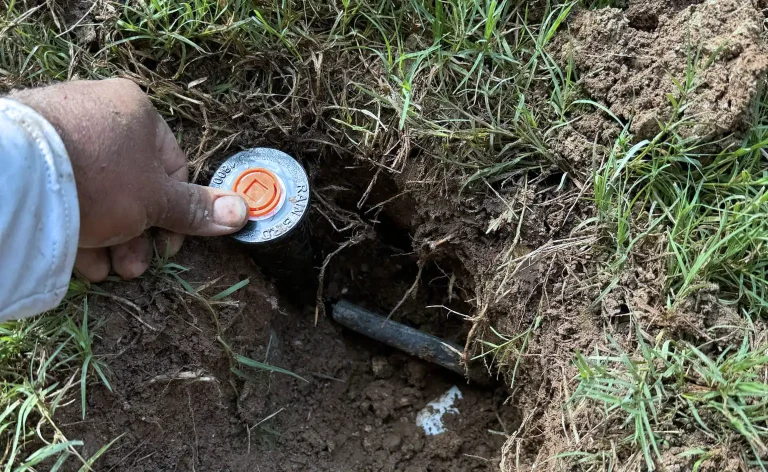
However, if the head sinks into the ground or wobbles excessively when touched, it means that somehow the riser or the main body of the head has somehow got snapped in the process. Now, in case, you manage to spot a tiny hole in the soil and can’t trace the sprinkler head anywhere around, it means that the entire head might have got broken off.
In cases where you only see a small hole in the soil with no sprinkler head visible, the entire unit may have broken off below ground level and dropped into the dirt.
Shut off water to the irrigation system
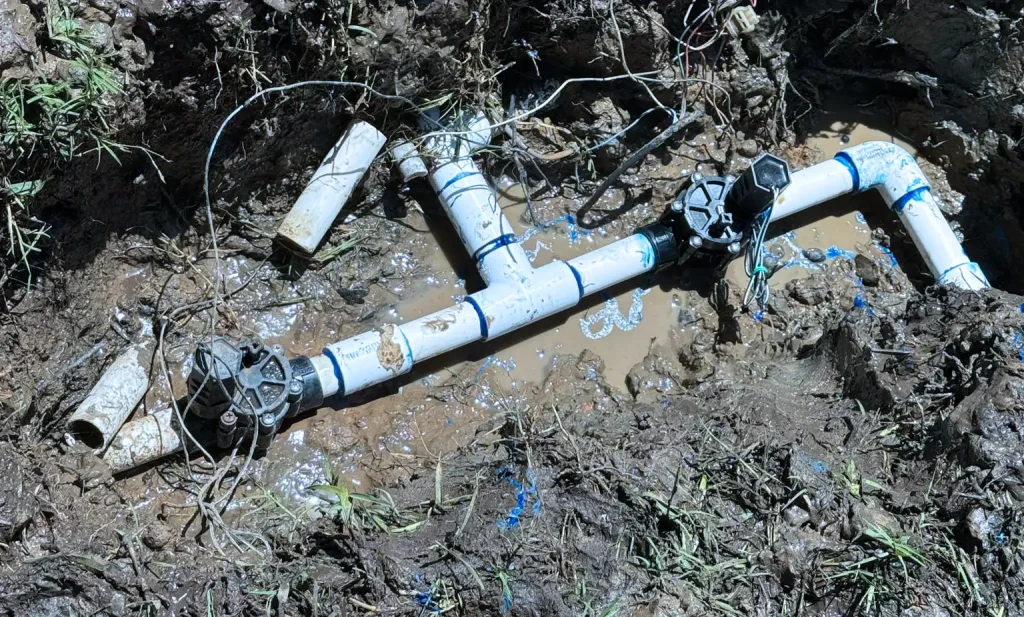
You need to turn off the water before making any attempt to repair the damaged sprinkler head. Don’t tinker with the controller because the controller only controls the scheduled runs and nothing else. Shut off the main irrigation instead. Main irrigation helps take off pressure from the line and therefore, it makes sense to shut it down first. Unless you have made some attempts to relieve pressure from the line, the soil will start collapsing as soon as you start digging into the lawn to get to the bottom of the problem.
Dig carefully and wider than you think
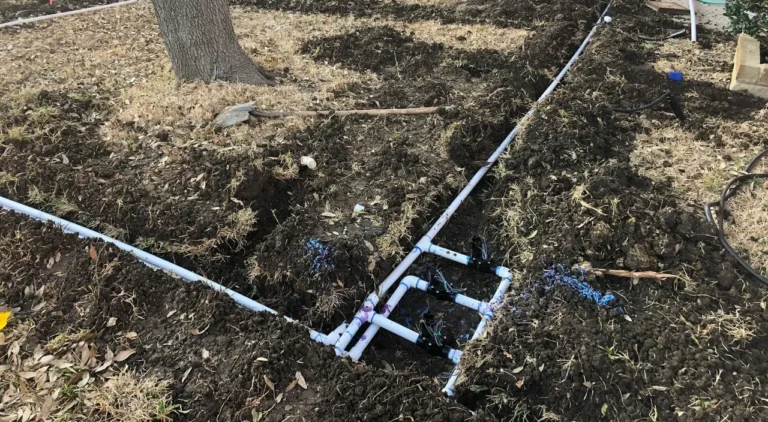
So, you already know the exact location of the damaged sprinkler head and you might feel that it is a good idea to dig straight down but this strategy is kind of risky to say the least. Installed horizontally, sprinkler pipes sit just a few inches beneath the sprinkler head. That means, if you plan to dig a small hole, you might end up damaging the pipes. Blaming the shovels will not solve the issue once the pipe gets hit by the edge of the shovel. You need to dig shallow but expand the area around the edge so that you don’t even up accidently hitting the pipes under. Now remove the soil around it and keep it at a safer distance. We know that it might look like overkill at first but believe us, a little more exposed piping will make the process much easier and safer.
Replace the damaged parts correctly
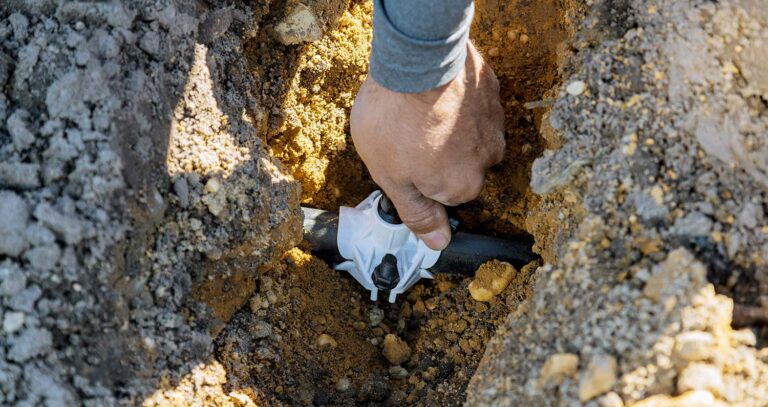
A twisted riser is a clear sign that the sprinkler head has got badly damaged. You will be able to unscrew the head from the riser. However, sometimes things can get a bit tricky and, in such situations, you will have to use tools like a needle nose pliers or an extractor to get the job done without creating a mess in the process. However, you need to stop using brute force because it can lead to below-ground cracks and those cracks are extremely hard to fix.
The replacement head needs to be examined carefully. Things like pressure rating, radius and spray pattern should match with the sprinkler head otherwise things may go out of hand. Mismatched heads can lead to uneven watering which will eventually lead to issues like over spraying and dry spots all across your lawn. In case, the nozzle is broken, you just have to replace it and you are good to go. Quick and cheap, but you need to make sure that the threads are seated straight otherwise, it can lead to more issues down the line.
Flush the line briefly before reinstalling
Before attaching the new sprinkler head to the riser, you need to turn the water on for a few moments with the head off otherwise, it can lead to issues like clogging. This step will ensure that the plastic particles and dirt are flushed out completely from the line before the new head is screwed into place. This is small step but a giant leap for preventing future clogs.
Set the head at the correct grade
The sprinkler head should sit flush with the soil level. If it sits just an inch above the soil level, it will become a magnet for lawn mowers. If it goes below the soil level, it will start attracting dirt and debris and over the course of time, the sprinkler head will stop retracting properly. In newly sodded lawns, soil tends to settle a bit and therefore, it makes sense to tamp the soil around the head so that the soil does not sink any further in the near future.
Final thoughts
We all know that running over a sprinkler head may seem like a minor inconvenience at first but if it is dealt with properly, it can easily snowball into a major crisis. We have to treat this issue as a systemic problem and not a plastic-part-gone-missing problem.

Korey Pope is a sprinkler and irrigation specialist with hands-on experience servicing residential and commercial systems across the Dallas–Fort Worth area. As part of the Elite Sprinkler Repair & Installation team, Korey focuses on diagnosing complex sprinkler issues, improving water efficiency, and helping homeowners protect their landscapes through proper irrigation practices.
With a strong working knowledge of sprinkler repairs, reroutes, controller troubleshooting, and system upgrades, Korey brings a practical, solutions-first approach to every project. His work reflects a deep understanding of North Texas soil conditions, seasonal watering needs, and the common problems that affect irrigation systems in the region.