Key takeaways
- Set your mower height a little higher so blades are less likely to hit sprinkler heads.
- Use a grass buffer ring and hand trim around heads instead of using a string trimmer.
- Avoid mowing right after irrigation, since wet soil shifts and mower wheels can rut.
- Place flags a few inches from heads on new sod so they stay visible.
- Watch for repeated light hits and unexplained water bill increases, which can signal hidden leaks.
On this page 8 sections
- Why Sprinkler Heads Get Damaged During Mowing
- Identify Your Sprinkler Head Type Before Cutting
- The Safe Mowing Height Rule
- Why Trimmers Cause More Damage Than Mowers
- Avoid Mowing Right After Irrigation Runs
- Use Physical Markers if Visibility Is Poor
- Repeated Small Hits Are Worse Than One Big Mistake
- Final Thoughts
You might be thinking – what could possibly go wrong while cutting grass around a sprinkler head, right? Most homeowners in Texas tend to treat it like any other Monday chore, but things get super messy very quickly.
All it takes is a little bit of carelessness and the plastic will get clipped by the mower blade. In some cases, the trimmer might get too close for comfort. Basically, all we are trying to say is don’t get too comfortable while mowing your lawn because you never know when things go south. It just takes one careless pass and the sprinkler will start spraying water sideways. Here we are going to break down how to cut grass near sprinkler heads without losing sleep over it.
Why Sprinkler Heads Get Damaged During Mowing
Perched slightly above soil level, most residential sprinkler heads are always at risk of getting hit or cracked during routine trimming or mowing operations. The positioning of the sprinkler heads is ideal for watering the lawn; however, this same placement puts them in a precarious situation as they find themselves within the striking zone of mowers. Reports suggest that lawn equipment related damage is one of the most common causes of expensive irrigation repairs.
Plastic caps can easily get clipped by Rotary mower decks whereas risers tend to get chewed up by string trimmers. Over time, even light contact adds up and makes the situation worse. Regular light contact can compromise the integrity of the seals. However, this does not mean that the signs of wear and tear will be visible immediately. Nope; damage does not show up immediately. Small or hairline cracks will continue to leak for weeks and months and unless you check your water bill carefully, you will have a hard time detecting it.
Soil movement is another factor that can make sprinkler head prone to damage. Seasonal expansion and contraction are quite common with clay-heavy soil and when the soil contracts, heads that were once flush with the turf suddenly sit high enough to get hit by mower’s blades.
Identify Your Sprinkler Head Type Before Cutting
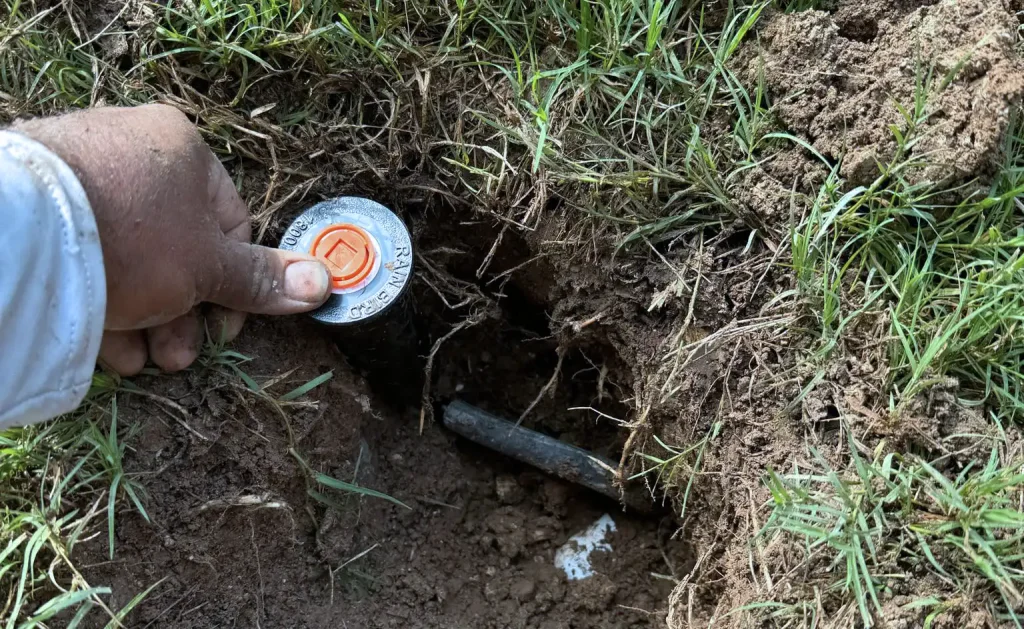
Sprinkler heads are available in different shapes and sizes. You simply can’t expect uniformity here. For example, pop up sprinkler heads pull back when they are not in use which is a nice feature. Now, in case, their retracting mechanism somehow got compromised, those pop-up sprinkler heads will sit above the soil level and thereby makes them highly susceptible to be hit by a mower blade.
On the other hand, rotor heads are robustly built and can take a beating or two. But their Achilles heel is the nozzles. When these nozzles get struck repeatedly by the mower blades, cracks will most certainly develop in one way or the other. Easier to locate, Fixed Shrub head is another popular sprinkler head type but they can easily get damaged by string trimmers.
The Safe Mowing Height Rule
This is one of those aspects that most homeowners tend to ignore but eventually it leads to more complications down the line. The easiest way to save your precious sprinkler heads is by making sure that you have correctly set the height of the mower. Don’t try to be too perfectionistic and set the height too low as low height increases the chances of contact. Reports show that if you set the height a little bit high, you will actually help the grass to recover and grow faster. This will also lower the chances of mower blades coming in contact with the sprinkler head. It is totally unnecessary to scalp grass tight because this would not have any positive impact on the longevity of the turf rather some study suggest that cutting grass too short can shorten the lifespan to a great extent.
Why Trimmers Cause More Damage Than Mowers
Just ask a homeowner in Texas whether he would trust a trimmer or a mower to cut grass around sprinkler heads and 99% of them would choose trimmers every single time. However, this is a clear case of misplaced trust. Plastic edges of sprinkler heads can easily get melted when they get struck by spinning nylon line. However, the damage might not be visible at first or might appear minor at the initial stage but it can cause irreparable damage to the seal. Threads might also get weakened in the process as well.
You can take a different approach here. You can make use of a grass buffer ring instead. Once you are done with mowing, you can then hand trim that section. Yeah, we understand that it will be a slow process but it will keep your sprinkler heads safe.
Avoid Mowing Right After Irrigation Runs
Don’t even think of mowing your lawn just after watering the lawn. You are simply inviting trouble at this stage. Wet soil tends to shift and can cause wheels to rut and thereby increase the chances of hitting an unsuspecting sprinkler head. You need to give the ground some time to firm up so that the wheels of the mower don’t slide or drift out of line.
Use Physical Markers if Visibility Is Poor
Be careful with newly installed sod because, in such cases, sprinkler heads usually get buried deep inside and make it almost impossible to spot from afar. Try a temporary marker instead. Place these flags a few inches away from each sprinkler head and they will act as visual barriers. Just avoid those places like the plague while mowing your lawn and you will never hit those pesky sprinkler heads ever again.
Repeated Small Hits Are Worse Than One Big Mistake
Contrary to what most people believe, a single clean break is a blessing in disguise. When a sprinkler head gets a clean hit, it becomes obvious and gives you the option to fix it fast. But on the other hand, repeated light contact is way more damaging. It can cause so many issues like warped sprays, cracked seals, loose threads and what not. Small leaks can be formed in such cases and more often than not, those small leaks go unnoticed most of the time. People tend to put the blame on controller settings or water pressure when they see a significant increase in zone water usage. But the real culprit is the damage that go unnoticed.
Final Thoughts
So, cutting grass around sprinklers is definitely not rocket since but people do tend to make mistakes while performing this supposedly basic task. At the end, all it boils down to one thing and that – restraint. You need to be extra careful and you will be good to go.

Korey Pope is a sprinkler and irrigation specialist with hands-on experience servicing residential and commercial systems across the Dallas–Fort Worth area. As part of the Elite Sprinkler Repair & Installation team, Korey focuses on diagnosing complex sprinkler issues, improving water efficiency, and helping homeowners protect their landscapes through proper irrigation practices.
With a strong working knowledge of sprinkler repairs, reroutes, controller troubleshooting, and system upgrades, Korey brings a practical, solutions-first approach to every project. His work reflects a deep understanding of North Texas soil conditions, seasonal watering needs, and the common problems that affect irrigation systems in the region.